Maltese
Qassatat tal-Inċova (Anchovy Pies)
Bake Maltese qassatat with shortcrust pastry and a bold anchovy, tomato, caper, and olive filling. This traditional recipe makes 8–10 savoury pies.
Bake Maltese qassatat with shortcrust pastry and a bold anchovy, tomato, caper, and olive filling. This traditional recipe makes 8–10 savoury pies.
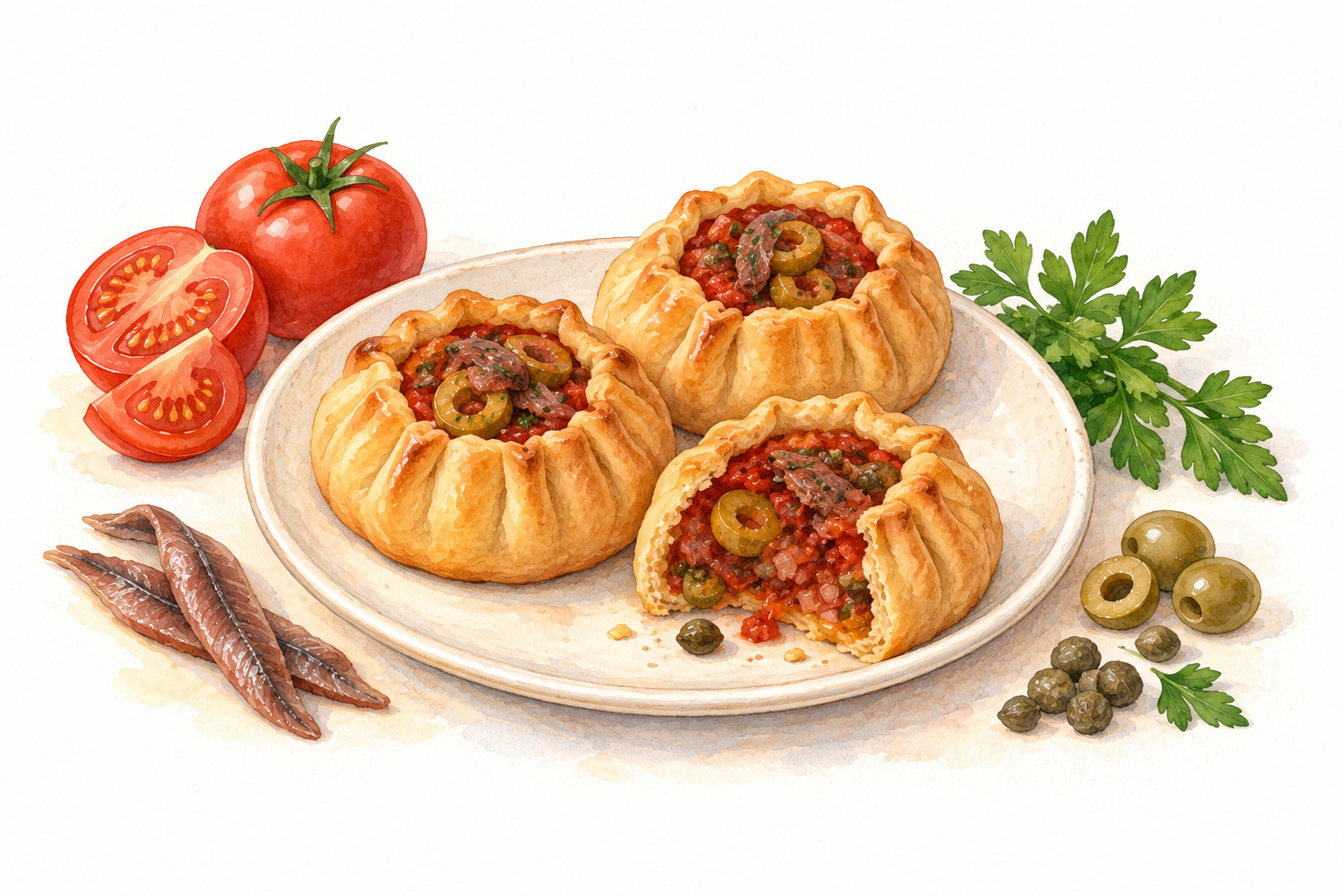
Bright, satisfying and built for real life.
This recipe brings together the generous flavours of Maltese cooking in a format that works on a busy day. Read through the method before starting and adjust seasoning to your taste.
The recipe
Qassatat tal-Inċova (Anchovy Pies)
Ingredients
Ingredients
Method
- 1
Make the pastry: Rub the cold butter into the flour and salt until the mixture resembles breadcrumbs. Add cold water gradually, mixing until the dough just comes together. Do not overwork. Wrap in cling film and chill for 30 minutes.
- 2
Sauté the aromatics: Heat the olive oil in a pan over medium heat. Add the chopped onion and cook for about 5 minutes until soft. Add the garlic and cook for another minute.
- 3
Build the filling: Stir in the chopped tomatoes and tomato paste. Cook over medium heat for 10–15 minutes, until the mixture is thick and no longer watery. Remove from heat.
- 4
Finish the filling: Stir in the anchovies, capers, olives, and parsley. Season with black pepper and add oregano or chilli flakes if using. Allow the filling to cool completely before shaping.
- 5
Shape the qassatat: Preheat the oven to 180°C (fan 170°C). Roll the chilled pastry to about 3–4mm thickness. Cut out circles roughly 10–12cm in diameter. Place a spoonful of filling in the centre of each circle. Fold the edges inward in pleats, leaving the centre slightly open — this is the traditional Maltese style.
- 6
Bake: Place on a lined baking tray and bake for 25–30 minutes until golden. Cool slightly before serving.
Qassatat tal-Inċova are traditional Maltese savoury pies filled with anchovies, tomato, capers, and olives. Commonly found in village bakeries across Malta, they are especially popular during Lent when meat is avoided. Their distinctive open-topped shape sets them apart from pastizzi, and the bold, salty filling is a hallmark of Maltese coastal cooking.
Serving Suggestions
Compare all three fillings and see shaping advice in the qassatat guide.
- Serve warm or at room temperature
- Add a squeeze of lemon to brighten the filling
- Great as a snack, light lunch, or part of a spread
- Pair with a simple salad or olives on the side
Traditional Notes & Tips
- The centre is traditionally left open, unlike pastizzi — this is intentional and distinctive
- Drain the tomatoes well and reduce the sauce properly; a watery filling will make the pastry soggy
- Anchovy flavour should be pronounced but balanced by the tomato and capers
- Using lard alongside butter gives the pastry a more authentic, slightly crumbly texture
- The filling must be completely cool before shaping, or the pastry will soften
- Qassatat are best eaten the same day but can be reheated in a low oven
Recipe adapted from Maltese Recipes.
Storage
No specific storage guidance is provided in the source recipe.
Freezing
Check the recipe notes for any dish-specific freezing guidance.
Reheating
Follow current food-safety guidance and reheat cooked food thoroughly where appropriate.
Keep cooking
You might also like
 115 min
Maltese · Oven
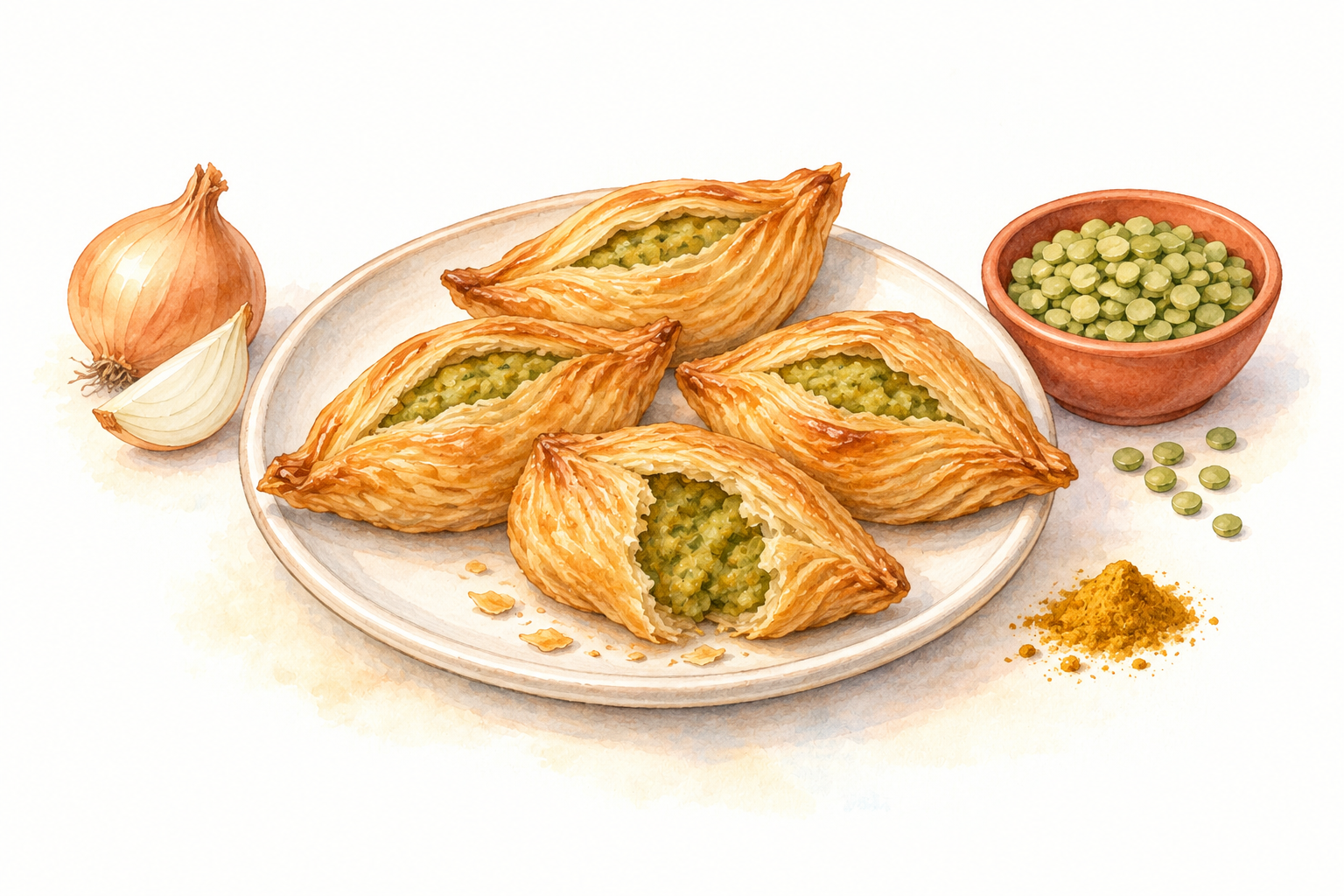
Pastizzi tal-Piżelli (Maltese Pea Pastries)
Classic Maltese flaky pastries filled with spiced mushy peas. Crisp, savoury, and a favourite from every pastizzeria.
 70 min
Maltese · Oven
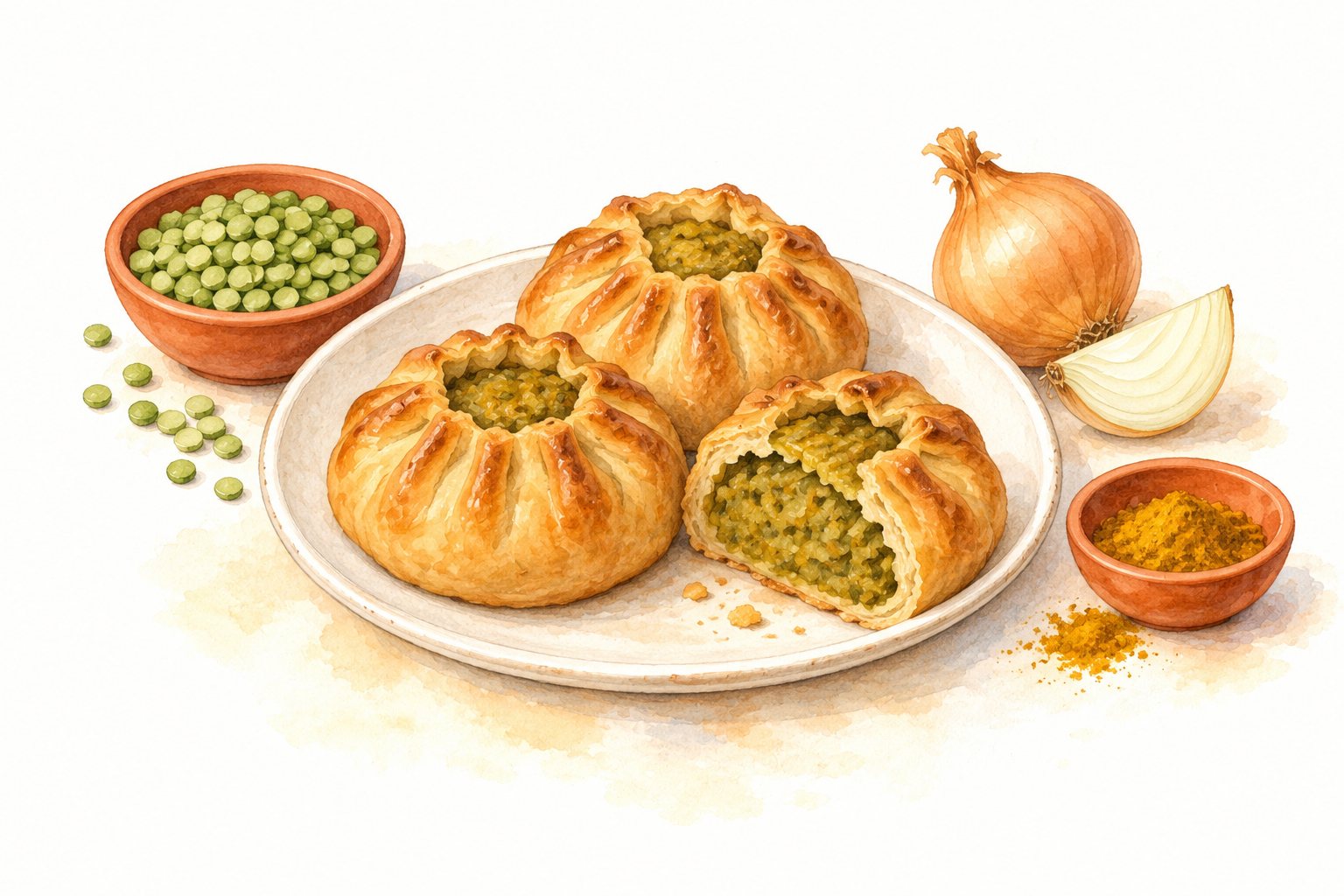
Qassatat tal-Piżelli (Maltese Pea Pies)
Make traditional Maltese qassatat with shortcrust pastry and a warmly spiced split-pea filling. A bakery-style recipe for 8–10 savoury pies.
 75 min
Maltese · Oven
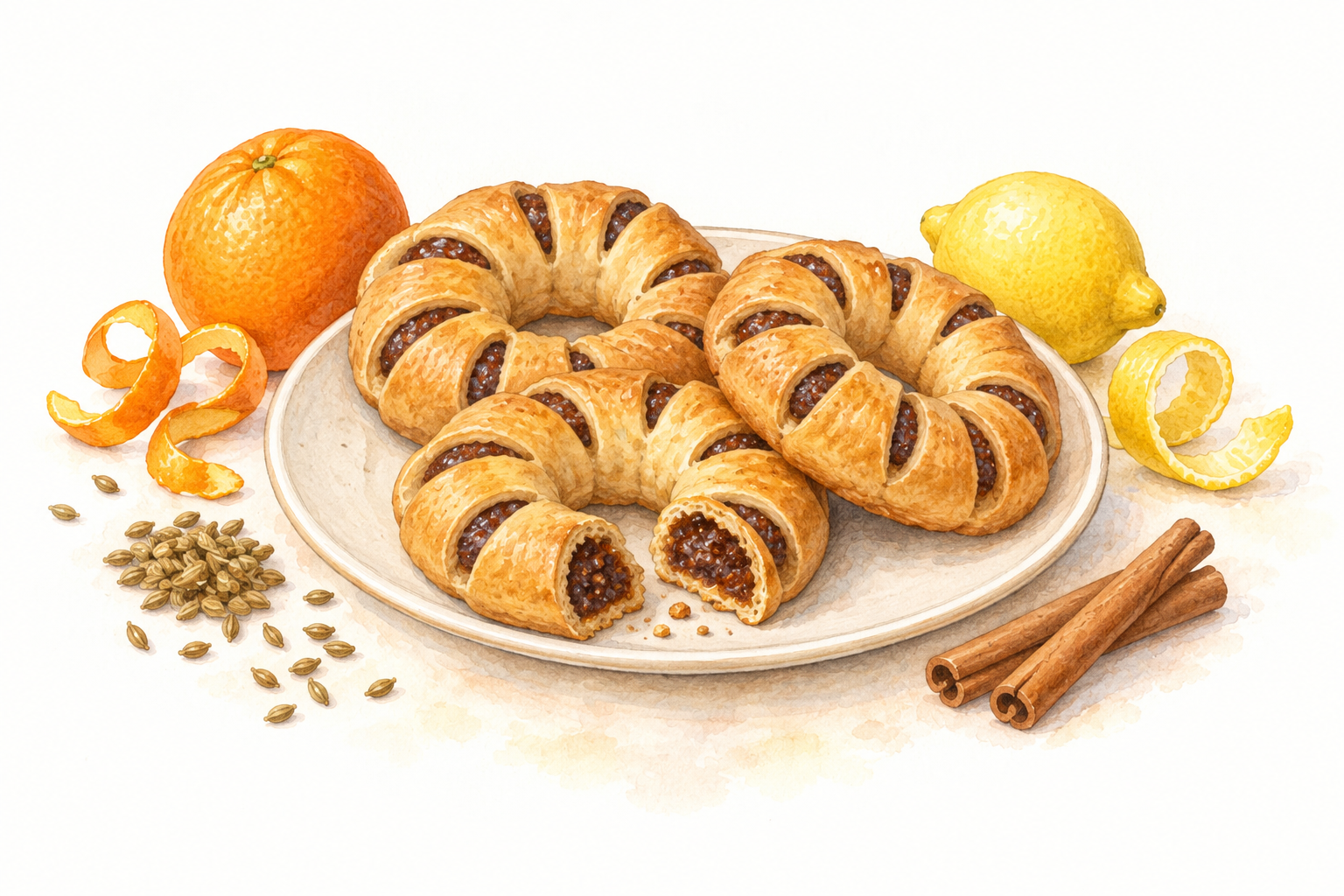
Qagħaq tal-Għasel (Maltese Honey Rings)
Traditional Maltese honey rings filled with treacle, citrus, spices, and semolina. A fragrant festive sweet with a rich, sticky centre.